






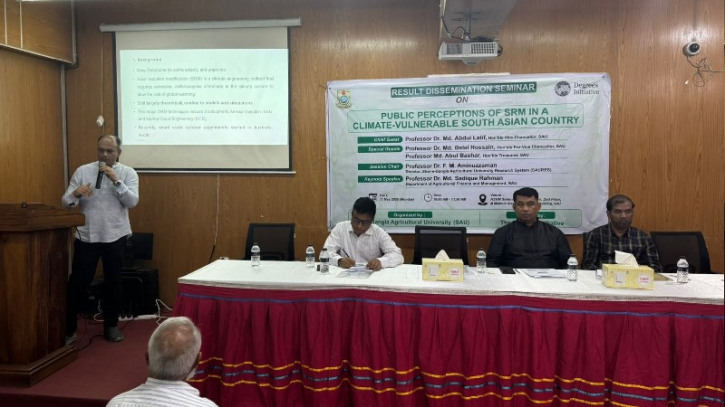
SRM Awareness Seminar Held at SAU
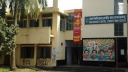
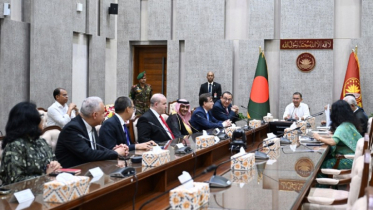
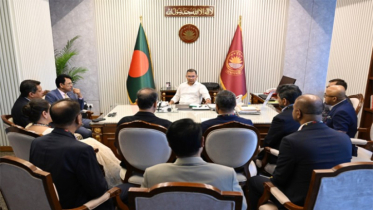
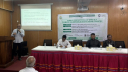
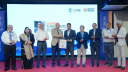
A seminar to increase awareness as well as share the findings from the research project entitled “Acceptance of solar radiation modification (SRM) in the context of a climate-vulnerable South Asian country: Public perception and their associated factors” was successfully held at Sher-e-Bangla Agricultural University (SAU) on 11 May 2026.
The research project examines how the public perceives SRM in Bangladesh, a climate-vulnerable country. The seminar brought together leading academicians, researchers, NGOs, development partners, and policymakers to discuss SRM, emphasizing the importance of integrating scientific advancement with public awareness and acceptance.
Prof. Dr. Md. Sadique Rahman provided the keynote speech, offering a brief overview of SRM techniques, their associated risks and benefits, and the perspectives of various stakeholders in Bangladesh. Prof. Rahman highlighted a knowledge and information disparity among stakeholders about SRM. Clear, evidence-based communication is necessary to address this challenge to gain a thorough comprehension of the Global South.
In his speech, Prof. Rahman argues that for SRM to be ethical, it must move away from a "top-down" Global North imposition toward a multilateral, transparent framework where vulnerable nations have veto power.
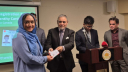
Professor Md. Abul Bashar, the Treasurer of SAU, served as the special guest at the seminar. In his speech, Prof. Bashar emphasized the need for balanced, scientifically grounded approaches to climate action and stressed the importance of investigating complementary climate solutions, such as SRM, alongside conventional mitigation techniques.
The session chair, Prof. F. M. Aminuzzaman, Director of the Sher-e-Bangla Agricultural University Research System, shared his insights on climate resilience and the role of academic institutions in advancing research and policy dialogue. Prof. Aminuzzaman emphasized the importance of multidisciplinary collaboration to comprehensively assess both the potential benefits and associated risks of SRM.
The seminar concluded with an interactive discussion in which participants underscored the necessity of informed policymaking, increased research investment, and regional and international cooperation to address challenges effectively. The project is funded by The Degrees Initiative, UK. The Degrees Initiative is an NGO dedicated to putting Global South at the center of the SRM conversation. Since 2018, it has awarded more than $2M in grants to over 170 researchers in 28 developing countries.