








BRAC University new campus architect shares vision of livable cities
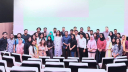
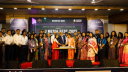
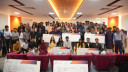
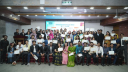
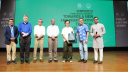
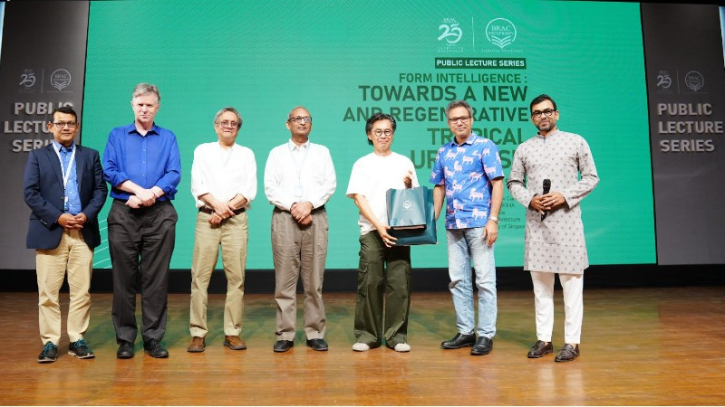
Wong Mun Summ, the architect behind BRAC University’s award-winning campus, gave a lecture in Dhaka today (Wednesday, 23 September 2026) exploring how rapidly growing cities of the tropics could be made to be more livable, resilient and regenerative amidst climate change.
Titled “Form Intelligence: Towards a New and Regenerative Tropical Urbanism”, the lecture on the Merul Badda campus was a part of the Silver Jubilee Public Lecture Series marking 25 years of BRAC University.
The lecture focused on projects of WOHA, Singapore, one of Southeast Asia's best known architectural firms of which Summ is the founding director.
Citing references from WOHA’s “Garden City Mega City”, which was published and presented at Venice Biennale in 2016, Summ shed light into how he was piecing together the projects to reimagine a dense tropical city bringing together people, nature, climate-responsive design and community.
Summ explained that form intelligence was the capacity of architectural form to respond, support and enhance the systemic networks within and around a built project, such that the form becomes an active participant in system performance rather than a passive container.
Bearing this in heart, the WOHA projects are characterized by their layered structure, greenery, breezeways and civic ratings.
For instance, PARKROYAL COLLECTION Pickering, a 5-star “hotel-in-a-garden” in Singapore renowned for its cascading tiered sky gardens and biophilic architecture, contains greenery that is over 200% of the site area.
Another project, Oasia Hotel Downtown in Singapore, a 27-story tropical “living tower” with a biophilic and porous design, has a façade of greenery enabling a 43% reduction in cooling energy consumption and a 21% reduction in maximum façade temperature.
Pan Pacific Orchard in Singapore features four distinct six-storey open-air strata vertically stacked on top of each other. Compared to a pristine forest of same site area, the building achieves more than 30% in filtration, pollutant removal and temperature regulation through its greenery.
In this way, WOHA has created a masterplan for a self-sufficient new town in northern Jakarta that will house 210,000 people. It is characterized by a rooftop canopy, a residential and workplace layer, a layer resembling rainforests and an underground transportation and services layer.
All in all, WOHA envisions Singapore to be a livable, sustainable and resilient city in 2100, where humans and nature co-exists in regenerative, circular systems.
Regarding the BRAC University campus, Summ cited a social survey on the design where 88% of the respondents said that the campus made them proud to be a part of the BRAC community.
“The country itself is extremely proud of…this extension of the nature (the campus)…giving to nature and becoming a part of nature,” said Vice-Chancellor Professor Syed Ferhat Anwar.
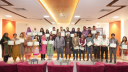
Pro-Vice-Chancellor Professor Arshad Mahmud Chowdhury, Treasurer Ariful Islam, Registrar David Dowland and Professor Fuad Hassan Mallick, dean of the School of Architecture and Design, were present while Khairul Basher, director of the Office of Communications, moderated the event.